
AC Compressor Failing? 6 Warning Signs | St. Pete FL
Your AC compressor is the most expensive single component in your cooling system, and when it starts failing, the signs are hard to miss. A failing ac compressor typically shows clear symptoms before it dies completely, giving you a window to act before you're stuck in Florida's heat with no cooling.
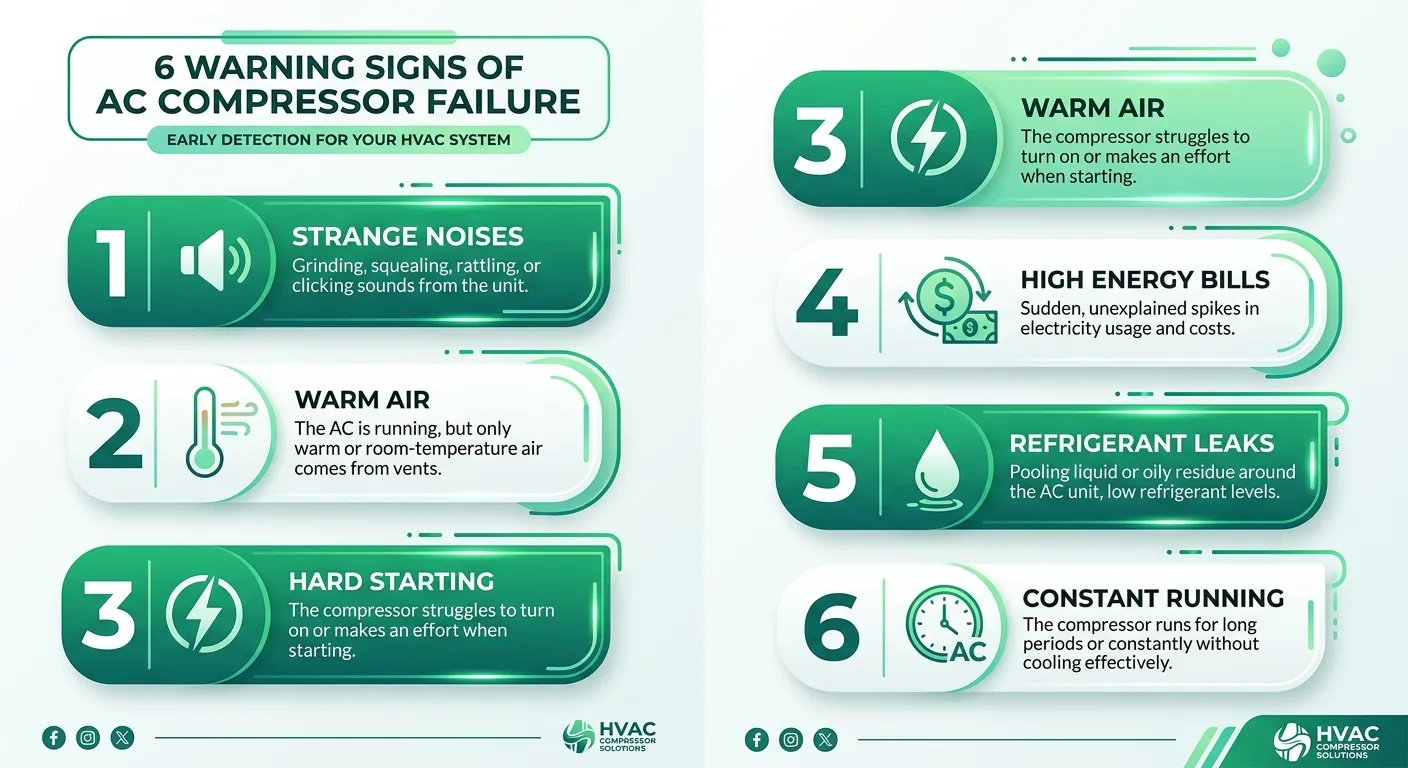
Catching these warning signs early can mean the difference between a $300 repair and a $3,000+ ac compressor replacement. Here's a quick overview of the six signs to watch for, followed by a deep dive into each one.
| Warning Sign | Urgency Level | Typical Fix |
|---|---|---|
| Strange noises from outdoor unit | High | Diagnose and repair or replace compressor |
| Warm air instead of cold | High | Check refrigerant, diagnose compressor |
| Hard starting / tripped breakers | Medium-High | Hard start kit or compressor replacement |
| Spike in energy bills | Medium | Professional diagnostic and tune-up |
| Moisture or refrigerant leaks | High | Licensed refrigerant leak repair |
| Runs constantly, never reaches temp | Medium-High | Compressor diagnostic and possible replacement |
What Your AC Compressor Does (and Why It Matters)
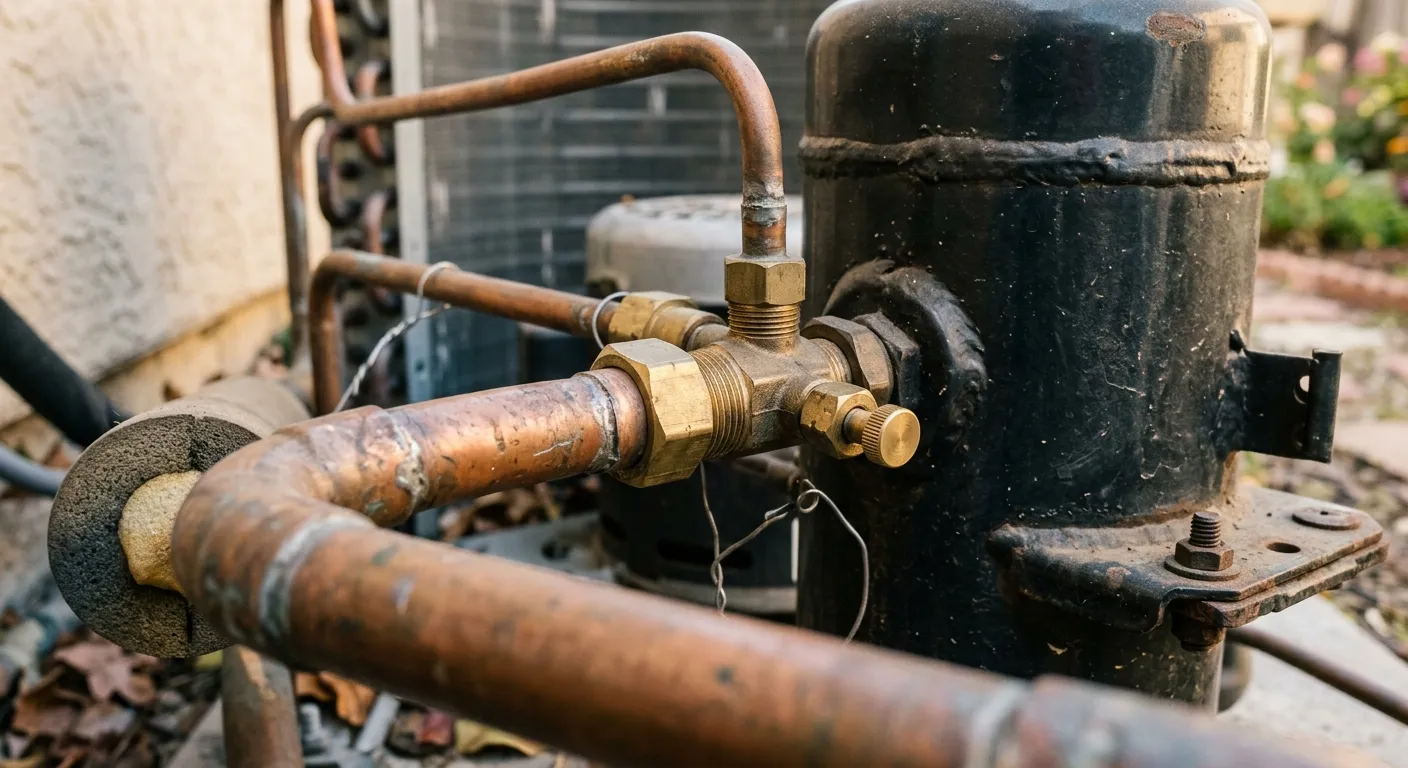
The ac compressor is the heart of your air conditioning system. It pressurizes refrigerant gas and pushes it through the condenser coils, where heat from inside your home gets released outdoors. Without a functioning compressor, your AC is just a fan blowing room-temperature air.
In Pinellas County, your compressor works harder than units in most other parts of the country. St. Petersburg averages highs above 85 degrees from May through October, which means your compressor runs for the majority of the year. That constant demand accelerates wear on internal components.
A typical ac compressor lasts 10 to 15 years, but Florida's climate can shorten that timeline. Knowing the early warning signs of compressor failure signs helps you plan ahead, budget for repairs, and avoid emergency breakdowns during peak summer heat.
1. Strange Noises Coming from Your Outdoor Unit
A healthy AC compressor hums steadily when running. If you start hearing grinding, rattling, clanking, or screeching from your outdoor unit, something inside the compressor is likely wearing out or has come loose. These sounds rarely improve on their own and usually worsen over time.
Grinding and Screeching Sounds
Grinding or screeching typically points to worn motor bearings or internal piston damage. The compressor motor spins at high speed, and when bearings deteriorate, metal-on-metal contact creates a harsh grinding noise. If you hear this, shut the system off and call a technician. Running a compressor with bad bearings can cause catastrophic internal failure.
Buzzing and Clicking at Startup
Repeated clicking or buzzing when the AC tries to start signals an electrical problem. The compressor attempts to engage but can't complete its startup cycle. Common culprits include a failing capacitor, a worn contactor, or a compressor that's beginning to seize. A hard start kit can sometimes extend the life of a struggling compressor, but it's a temporary fix.
Hearing strange noises from your AC? Get a professional diagnosis today.
Killian's Air Conditioning - Licensed & Insured (CAC1823158)
📞 (727) 591-47762. AC Compressor Blows Warm Air Instead of Cold
When your AC is running but only blowing warm or lukewarm air, the compressor is a prime suspect. If the compressor can't properly pressurize the refrigerant, the refrigerant can't absorb heat from your indoor air. The result is an ac not working to cool your home even though the fan keeps blowing.
Before assuming the compressor is the problem, a technician will check other potential causes. Here's how to tell the difference:
| Warm Air Cause | Key Clue | Likely Fix |
|---|---|---|
| Failing compressor | System runs normally but air is warm | Compressor repair or replacement |
| Low refrigerant | Ice buildup on refrigerant lines | Leak repair and refrigerant recharge |
| Dirty air filter | Reduced airflow from all vents | Replace the filter |
| Frozen evaporator coil | Ice visible on indoor unit | Thaw coil, check airflow and refrigerant |
| Thermostat malfunction | Display errors or incorrect readings | Recalibrate or replace thermostat |
If you've replaced the filter and the thermostat is set correctly but you're still getting warm air, the compressor or refrigerant charge is the most likely issue. A licensed technician with refrigerant gauges can confirm the diagnosis in about 30 minutes.
3. Hard Starting and Frequent Tripped Breakers
A compressor that struggles to start, sometimes called "hard starting," draws excessive electrical current during its startup cycle. You might notice the lights in your home flickering when the AC kicks on, or the circuit breaker for your AC trips repeatedly.
Hard starting stresses the compressor's motor windings and electrical connections. Each failed start attempt generates heat buildup inside the compressor, which accelerates wear on internal components. Over time, this cycle damages the compressor beyond repair.
A hard start kit (a capacitor boost device) can help a struggling compressor start more reliably. It costs $100 to $300 installed and buys time, but it doesn't fix the underlying problem. If your compressor needs a hard start kit, plan for ac compressor replacement within the next one to three years.
Repeated breaker trips are a safety concern. The breaker is protecting your home's wiring from the overcurrent draw. Never replace a breaker with a higher-rated one to "fix" the tripping. Instead, have a technician diagnose why the compressor is pulling excessive amps. In Pinellas County, electrical work on HVAC equipment requires a licensed contractor.
4. Higher Energy Bills with No Change in Usage
A failing compressor runs less efficiently, which shows up directly on your electric bill. When internal components wear down, the compressor works harder and runs longer to achieve the same cooling output. This extra runtime translates to higher electricity consumption.
Florida homeowners typically see their highest electric bills from June through September. But if your bill spikes 20% to 30% above the same month last year with no changes in your habits or utility rates, your compressor may be the reason.
| Month | Normal Bill Range (2,000 sq ft home) | Red Flag Amount |
|---|---|---|
| June | $150 - $220 | Over $275 |
| July | $175 - $250 | Over $320 |
| August | $175 - $250 | Over $320 |
| September | $150 - $220 | Over $275 |
These ranges are approximate for the St. Petersburg area and vary based on insulation quality, home age, and thermostat settings. If your bill consistently exceeds the red flag amounts, schedule a diagnostic before the problem escalates.
To catch ac compressor problems early, track your monthly kilowatt-hour usage (listed on your Duke Energy or TECO bill) rather than just the dollar amount. Rate changes can mask or amplify usage trends. A sudden jump in kWh usage with stable habits points to equipment inefficiency.
5. Visible Moisture or Refrigerant Leaks Near the Unit
Oil stains or wet spots around the base of your outdoor unit can indicate a refrigerant leak at the compressor fittings. Refrigerant leaks reduce system pressure, forcing the compressor to work harder. Over time, running with low refrigerant causes the compressor to overheat and fail prematurely.
Refrigerant is a regulated substance. Under EPA regulations, only technicians with EPA Section 608 certification can legally handle and recharge refrigerant. As an EPA certified company, Killian's Air Conditioning handles all refrigerant work in compliance with federal requirements.
Signs of a refrigerant leak near the compressor include:
- Oil residue or dark stains on copper refrigerant lines
- Hissing or bubbling sounds near the outdoor unit
- Ice forming on the refrigerant lines running to the indoor unit
- A sweet, chemical smell near the outdoor unit (some refrigerants have a faint odor)
If you notice any of these signs, avoid touching the area and call a licensed technician. Refrigerant contact can cause frostbite-like skin injuries, and inhaling concentrated refrigerant vapor is hazardous.
6. AC Compressor Runs Constantly Without Reaching Set Temperature
If your AC runs for hours without ever reaching the temperature on your thermostat, the compressor may have lost its ability to create proper pressure differential. A healthy compressor should cycle on and off throughout the day, running for 15 to 20 minute intervals during typical Florida weather.
Two distinct patterns signal ac compressor trouble:
- Continuous running: The compressor never shuts off and the home stays warm. This usually means the compressor can't generate enough cooling capacity.
- Short cycling: The compressor starts, runs for 2 to 5 minutes, shuts off, then restarts. This pattern often points to overheating or electrical faults.
Both patterns put excessive strain on the entire system, not just the compressor. Continuous running wears out the fan motor, stresses ductwork connections, and drives up electricity costs. Short cycling is especially damaging because each startup draws a surge of current that generates heat in the motor windings.
If your system has been running nonstop for more than an hour without reaching the set temperature (and the thermostat is set to a reasonable 74 to 78 degrees), turn the system off for 15 minutes to let the compressor cool down, then call a technician.
AC Compressor Repair vs. Replacement: Cost Breakdown
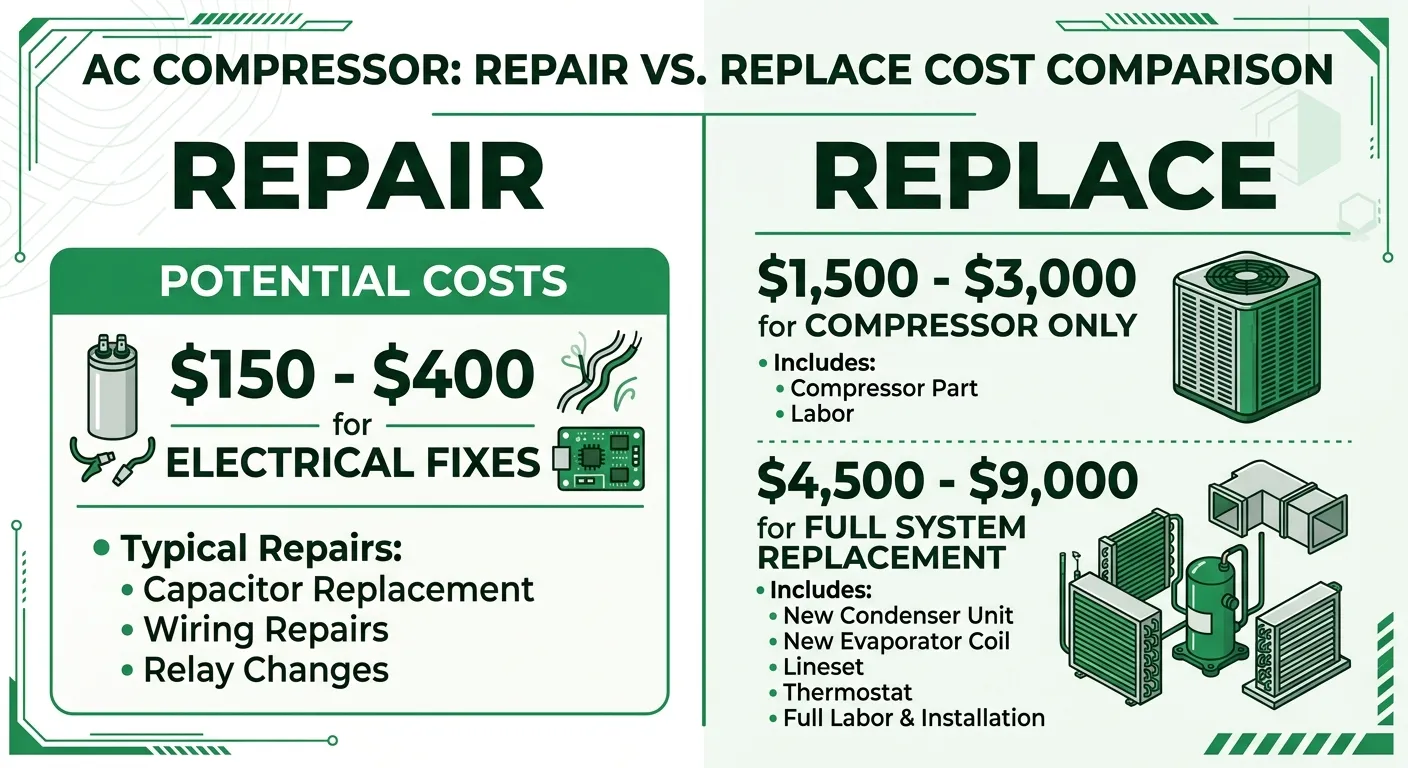
Not every compressor problem requires a full replacement. Some issues are repairable, while others make replacement the smarter financial decision. Here's how ac compressor cost breaks down for common scenarios in the Pinellas County area.
| Service | Typical Cost Range | Timeframe |
|---|---|---|
| Diagnostic visit | $75 - $150 | Same day |
| Capacitor replacement | $150 - $350 | Same day |
| Hard start kit installation | $100 - $300 | Same day |
| Contactor replacement | $150 - $400 | Same day |
| Compressor replacement (labor + part) | $1,500 - $3,000 | 1-3 days |
| Full AC system replacement | $4,500 - $9,000+ | 1-2 days |
Costs vary based on system size, brand, refrigerant type, and accessibility. Prices reflect 2026 Pinellas County averages.
When AC Compressor Repair Makes Sense
Repair is usually the right call when your system is under 8 years old, the problem is electrical rather than mechanical, your system still uses R-410A refrigerant, or the compressor is under manufacturer warranty. Many compressor warranties cover 5 to 10 years on the part, though labor is typically separate.
When Full AC Compressor Replacement Is the Better Choice
Full system replacement makes more financial sense when your system is over 10 to 12 years old, the unit uses R-22 (Freon) refrigerant (which has been phased out and is extremely expensive), you've already made multiple repairs in the past two years, or the ac compressor cost exceeds 50% of a new system's price.
The 50% rule is a reliable guideline: if the repair estimate is more than half the cost of a new system, invest in a replacement. You'll get a new warranty, better energy efficiency (modern systems are 20% to 40% more efficient than units from 10+ years ago), and years of reliable service.
How to Protect Your AC Compressor from Premature Failure
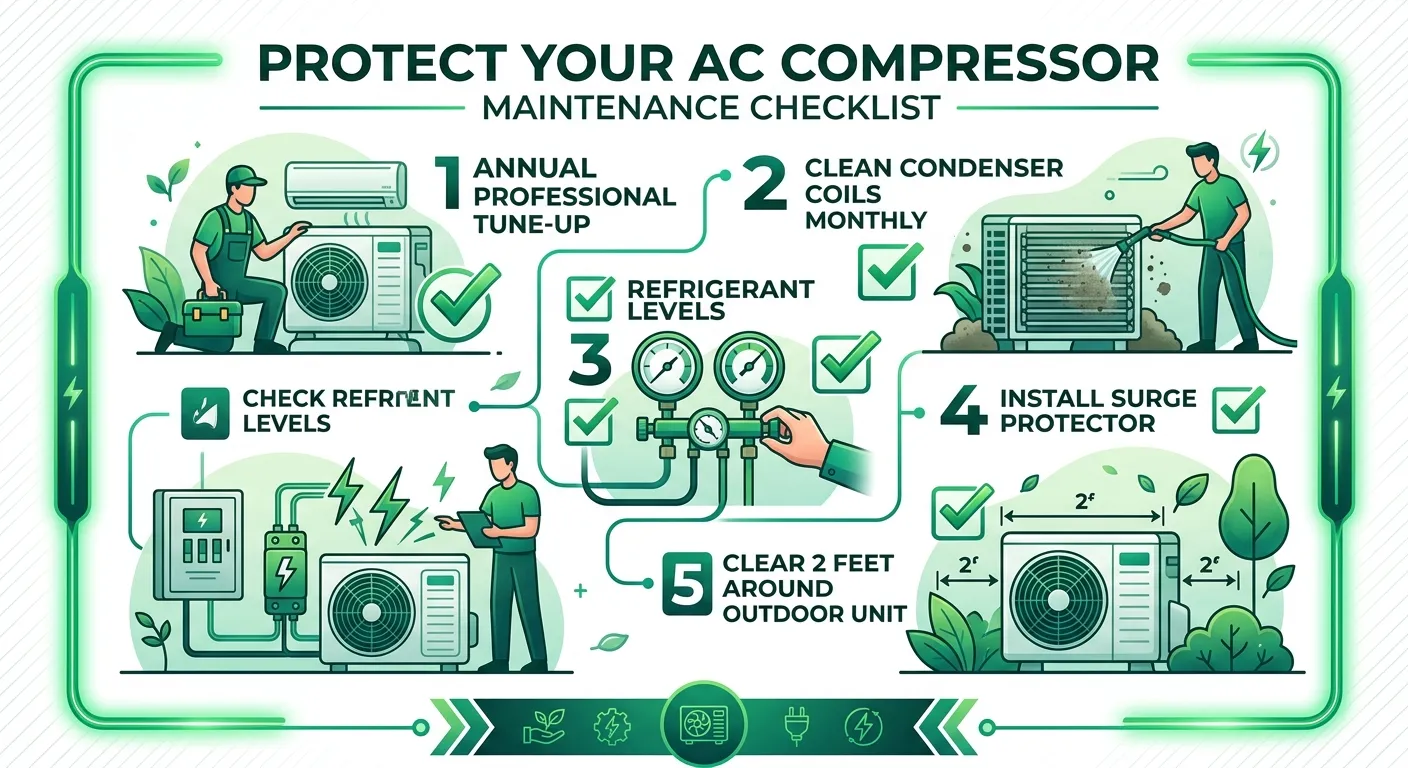
Regular preventive maintenance is the single best way to extend your compressor's lifespan. Here's what makes the biggest difference:
- Schedule annual tune-ups. A professional inspection catches small problems before they become compressor-killing issues. Spring is the ideal time in Pinellas County, before summer demand peaks.
- Keep condenser coils clean. Dirty coils force the compressor to work harder. Rinse the outdoor unit with a garden hose monthly during cooling season.
- Maintain proper refrigerant charge. Too much or too little refrigerant stresses the compressor. Only a licensed technician should check and adjust refrigerant levels.
- Install a surge protector. Power surges from Florida thunderstorms can damage compressor electronics. A whole-home or dedicated HVAC surge protector costs $100 to $300 and provides real protection.
- Clear debris around the outdoor unit. Maintain at least 2 feet of clearance on all sides for proper airflow. Trim back vegetation, remove leaves, and keep the area around the unit open.
Homeowners in Clearwater, Largo, Seminole, and across Pinellas County deal with the same harsh conditions that stress compressors. Taking these steps doesn't guarantee a compressor will last forever, but it significantly reduces the chance of premature failure.
Frequently Asked Questions About AC Compressor Problems
How much does it cost to replace an AC compressor?
AC compressor replacement typically costs $1,500 to $3,000 for the part and labor in the Pinellas County area. The exact price depends on your system's size (tonnage), brand, and refrigerant type. If you have an older system using R-22 refrigerant, costs can run higher because R-22 is no longer manufactured and existing supplies are limited. Full system replacement, which includes the compressor, condenser, and evaporator coil, ranges from $4,500 to $9,000 or more.
Can you repair an AC compressor, or does it always need replacement?
Some compressor issues are repairable without replacing the entire unit. Electrical problems like a bad capacitor, faulty contactor, or wiring issue can be fixed for $150 to $400. A hard start kit can help a compressor that struggles to start. However, internal mechanical failure (broken valves, seized pistons, or burned windings) almost always requires full compressor replacement. A licensed NATE certified technician can perform diagnostic tests to determine which path makes sense.
How long does an AC compressor last?
Most AC compressors last 10 to 15 years with proper maintenance. In Florida, where AC systems run 8 to 10 months per year, compressors may reach the lower end of that range. Factors that affect lifespan include maintenance frequency, refrigerant charge accuracy, electrical supply stability, and how well airflow is maintained through the condenser. Annual tune-ups and keeping the outdoor unit clean are the most effective ways to maximize compressor life.
What causes an AC compressor to fail?
The most common causes of compressor failure are low refrigerant from leaks, dirty condenser coils that restrict heat transfer, electrical issues (voltage spikes, bad capacitors), lack of regular maintenance, and simple wear from age and heavy use. In Florida, the combination of high heat, humidity, salt air near the coast, and frequent thunderstorms creates conditions that accelerate compressor wear compared to milder climates.
Is it worth replacing a compressor on an old AC unit?
If your AC system is over 10 to 12 years old, replacing just the ac compressor rarely makes financial sense. The 50% rule is a good benchmark: if the repair costs more than half the price of a new system, go with the full replacement.
Older systems also use less efficient technology, so a new system will lower your monthly energy bills. Systems still running on R-22 refrigerant are especially poor candidates for compressor-only replacement due to the high cost of that refrigerant.
Why is my AC running but not cooling the house?
Several issues can cause an AC to run without blowing cold air. A failing ac compressor is one of the most serious causes, but simpler problems are more common. Start by checking your air filter (a clogged filter restricts airflow and can freeze the evaporator coil), and verify the thermostat is set to "cool" at the right temperature.
If those basic checks don't resolve the issue, inspect the outdoor unit for debris blocking the condenser. When simple fixes don't help, you likely need a professional ac compressor diagnostic to check refrigerant levels and compressor operation.
Keep Your AC Compressor Running Strong in Pinellas County
The six warning signs of ac compressor failure, strange noises, warm air, hard starting, rising energy bills, refrigerant leaks, and constant running, are your early alert system. Catching any of these signs early and scheduling a professional diagnostic can save you thousands compared to waiting for a complete breakdown during a July heat wave.
If your system is showing any of these compressor failure signs, don't wait for a complete failure. Killian's Air Conditioning provides fast, honest diagnostics and repair for homeowners across St. Petersburg, Clearwater, Largo, Seminole, and all of Pinellas County. Our NATE certified technicians will give you a straight answer on whether your compressor needs a repair or a replacement.
Call Killian's Air Conditioning at (727) 591-4776 to schedule your AC diagnostic today. Licensed and insured, CAC1823158. Life's a Breeze with Killian's Air.